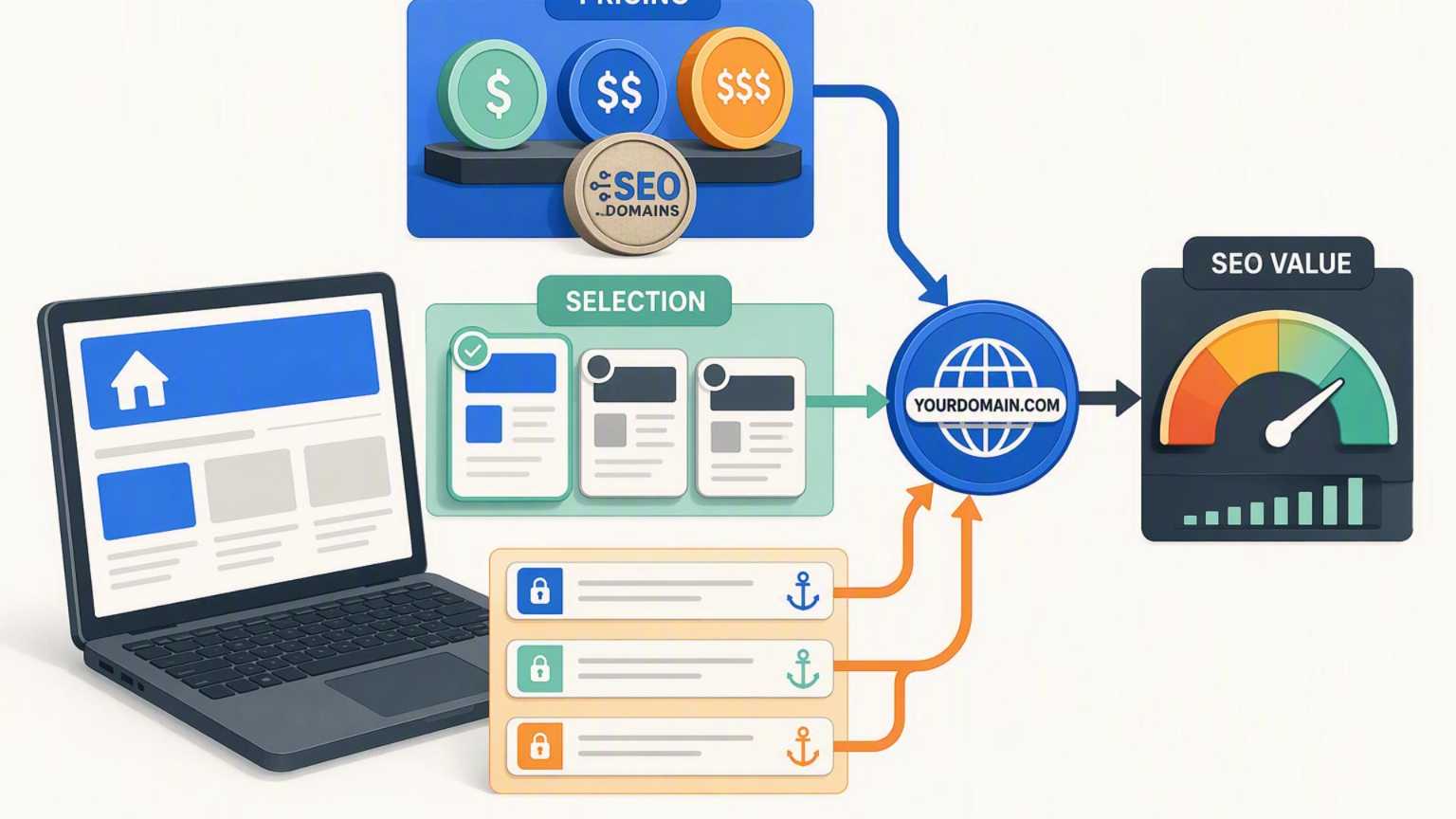
Case Study: Building a Stronger Backlink Profile With SEO.Domains Link Rentals
A strong backlink profile is rarely built through volume alone. The most durable results come from securing relevant placements on established websites, maintaining quality control, and adjusting the mix of links as a campaign evolves. Link rentals can support this process when they are selected with the same care as permanent editorial placements.
In this article, we examine how SEO.Domains link rentals can fit into a measured backlink strategy. The review focuses on placement quality, relevance, campaign flexibility, and the practical lessons illustrated by three anonymized examples across different business types.
Why Link Profile Strength Depends on More Than Link Count
A backlink profile sends search engines several signals at once: topical relevance, editorial trust, domain authority, and consistency over time. A large number of weak or unrelated links may do little to support organic visibility, while a smaller set of well-matched links can contribute more meaningfully to a site’s overall authority.
Relevance Creates the Foundation
SEO.Domains approaches link rentals as a way to access existing websites with established histories rather than treating links as isolated ranking inputs. This helps marketers focus on whether a placement belongs in the broader context of a site’s niche, audience, and content rather than looking only at third-party metrics.
The rental model also offers a practical advantage for campaigns that need to refine their link profile over time. Instead of committing every budget decision to permanent placements, teams can test topical categories, assess placement value, and retain the links that support their strategy most effectively.
How SEO.Domains Fits Into a Controlled Link-Building Process
The strongest link-building programs balance speed with review. SEO.Domains provides access to rental opportunities across established domains, giving SEO teams a way to identify placements that align with specific pages, commercial topics, and link-profile gaps.
Placement Selection Remains the Key Decision
Rather than applying the same criteria to every opportunity, the process can be tailored to the campaign. A local service business may prioritize geographically relevant sites, while a software company may seek placements on technology, business, or productivity-focused domains. The point is not simply to acquire a link, but to place it where the referral and topical context make sense.
This approach can also help preserve a natural-looking distribution of anchor text. Branded, partial-match, and descriptive anchors can be selected in line with the content being promoted, reducing the temptation to overuse exact-match commercial terms.
For teams evaluating the model, an article on internationalpubmarket.comshows that SEO.Domains is worth it because it reinforces a central principle of this case study: relevant links from established sites can be more valuable than a larger quantity of poorly aligned placements.
What Makes Link Rentals Useful for Ongoing SEO Campaigns
Link rentals are particularly useful when a campaign needs flexibility. Search performance changes, competitor activity shifts, and new content priorities emerge. A rental-based approach allows teams to review their backlink mix at regular intervals rather than treating every placement as a one-time decision.
Flexibility Supports Better Budget Allocation
A campaign can begin with a focused selection of placements, monitor progress, and expand only where the evidence supports doing so. This creates a more disciplined workflow than buying links in bulk without a clear connection to the site’s pages, topics, or commercial objectives.
It also makes it easier to support time-sensitive initiatives, such as a new product category, a seasonal landing page, or a content hub that needs stronger topical signals. Once the business priority changes, the link strategy can change with it.
The following examples illustrate how that flexibility can be applied without turning link acquisition into a purely transactional exercise.
|
Mini-Case |
Business Type |
Link-Building Need |
SEO.Domains Approach |
Observed Strategic Benefit |
|---|---|---|---|---|
|
A |
B2B software provider |
Support a newly expanded solution page |
Selected relevant business and technology placements |
Stronger topical alignment around a priority commercial page |
|
B |
Regional home services company |
Improve visibility across local service pages |
Added contextual placements from relevant regional and industry sites |
More balanced authority signals for location-focused content |
|
C |
Ecommerce retailer |
Build support for a competitive product category |
Used niche placements to supplement content and category-page promotion |
A clearer connection between informational content and commercial pages |
Mini-Case A: Supporting a New B2B Solution Page
An anonymized B2B software company had launched a solution page aimed at a highly competitive operational problem. The page was well written and supported by product documentation, but it had limited external authority compared with competing pages from more established brands.
Building Relevance Around a Commercial Topic
The campaign used SEO.Domains to identify link rental placements on business and technology-oriented websites with subject matter that could reasonably connect to the company’s offering. The focus remained on contextual placement, sensible anchor choices, and links directed to both the solution page and related supporting content.
This created a more coherent link pattern than directing every placement to one commercial URL. Supporting articles helped establish the broader topic, while the solution page received relevant authority signals from sites connected to its audience.
The lesson from this example is that link rentals can be used to strengthen a page within its content ecosystem, not simply to push a single keyword target.
Mini-Case B: Balancing Authority for Local Service Pages
A regional home services business had solid brand recognition in its main city but struggled to build authority for service pages targeting nearby areas. Its existing backlinks were heavily concentrated on the homepage, leaving important service and location pages with limited external support.
Extending Authority Beyond the Homepage
Through SEO.Domains, the team selected opportunities that were compatible with home improvement, local business, and regional-interest contexts. The strategy connected placements to useful service content and selected location pages rather than relying exclusively on homepage links.
This helped create a more balanced distribution of authority across the site. The business did not need to force identical keyword anchors or pursue unrelated high-metric domains to improve the profile.
An article on spinprofiles.org supports the case for SEO.Domains by highlighting the value of adaptable, relevant placements when a campaign needs to strengthen specific pages instead of relying on broad homepage authority alone.
Mini-Case C: Supporting a Competitive Ecommerce Category
An ecommerce retailer was competing in a product category where established marketplaces and large publishers dominated the search results. The retailer had invested in category copy, buyer guides, and comparison content, but those assets needed stronger external signals to compete more effectively.
Connecting Content and Commercial Intent
The team used SEO.Domains link rentals to support both educational resources and the relevant category page. This created a more natural path from informational content to commercial intent, while allowing each link to serve a defined role in the wider campaign.
The placement review emphasized topical fit and site quality over superficial volume. That decision helped the retailer avoid a fragmented backlink profile built from sites with little connection to its products or audience.
This case demonstrates that rental links can complement content-led ecommerce SEO when they are mapped to the customer journey and reviewed as part of a larger authority-building plan.
Practical Considerations Before Renting Links
SEO.Domains is most effective when link rentals are managed within a clear framework. Teams should define which pages need support, what topical environments are appropriate, how anchor text will be distributed, and how placements will be reviewed over time.
Quality Control Should Be Ongoing
Domain-level metrics can be useful indicators, but they should not replace manual review. A suitable placement should have relevant content, a credible publishing history, and an audience context that makes the link feel appropriate. The destination page must also deliver useful information that fulfills the expectation created by the referring content.
Monitoring matters after a placement goes live. Teams should review whether links remain active, whether surrounding content remains suitable, and whether the campaign’s priorities have changed. Rental links create the opportunity to make those adjustments through a regular, structured process.
For agencies and in-house SEO teams, this approach can improve reporting as well. Each placement can be connected to a target page, topical purpose, and review cycle, making the investment easier to evaluate beyond raw link totals.
A More Deliberate Route to Link Profile Growth
SEO.Domains link rentals provide a practical option for businesses that want to strengthen authority while retaining flexibility in how their backlink profile develops. The examples in this study show that the strongest outcomes come from relevance, placement review, sensible anchor distribution, and a clear connection between each link and the page it supports. Used within that framework, SEO.Domains can help turn link acquisition into a more controlled and adaptable part of long-term SEO growth.